
In the rapidly expanding fast-food sector, QSR automation has shifted from a futuristic concept to a daily operational necessity. The Polish market clearly reflects this trend: new global players like Popeyes are entering the scene, Burger King is accelerating its expansion, and Wendy’s is actively searching for franchise partners.
As competition intensifies, quick service restaurants must rethink how they operate to remain profitable and relevant. To win in this environment, brands must deliver faster and more cost-effective service—something that is increasingly impossible without automation. By improving Speed of Service (SOS), enabling contactless ordering, and driving operational efficiency, automation becomes the foundation of scalable growth, digital transformation, and effective guest experience optimization.
In this article, you will learn:
- Why QSR automation is essential for scaling restaurant chains efficiently.
- How to design restaurant layouts to maximize self-service throughput.
- The impact of automation on operational costs and speed of service.
- How centralized management systems support rapid expansion into new markets.
- Insights from major players like Popeyes and Burger King on digital transformation.
Why is QSR Automation Essential in 2026?
Labor shortages remain one of the most pressing challenges for the QSR industry. Finding and retaining staff is increasingly difficult, while labor costs continue to rise. QSR automation directly addresses this issue by taking over repetitive, low-value tasks such as order taking and payment processing. Self-service kiosks and contactless ordering reduce dependency on front-line staff, allowing employees to focus on food preparation and service quality while significantly improving overall operational efficiency.
At the same time, customer expectations around speed have never been higher. The very promise of a quick service restaurant is speed, yet manual processes and long queues often undermine that promise. Automation dramatically improves Speed of Service (SOS) by shortening order times, reducing errors, and smoothing peak-hour traffic. Faster ordering and more predictable workflows not only increase throughput but also create a more consistent and reliable guest journey.
Finally, consumer behavior itself is evolving. Digital-native generations, especially Gen Z, have grown up in a world of smartphones and on-demand services. For them, interacting with a screen feels more natural than speaking to a cashier. Automated ordering experiences support broader digital transformation initiatives, enabling personalized menus, tailored offers, and data-driven guest experience optimization. As QSR brands scale and compete in 2026, automation is no longer just an operational upgrade—it is a strategic necessity for relevance, scalability, and long-term growth.
Read Also about Restaurant Automation.
Key Areas of Automation for Restaurant Chains
Ordering and Self-Service:
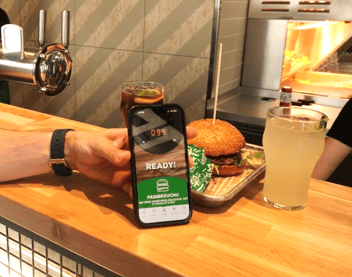
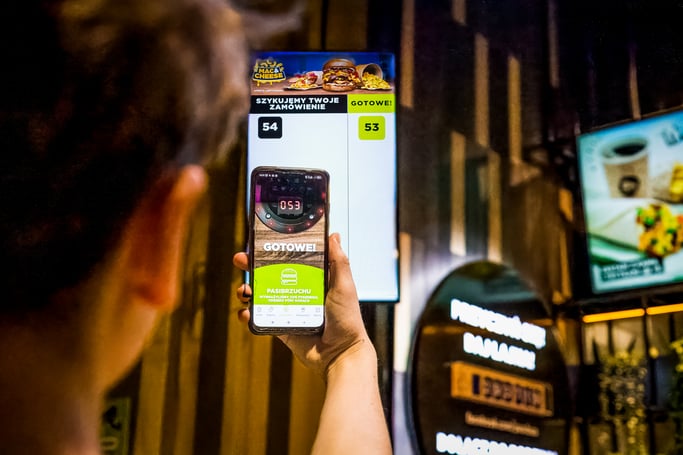
One of the primary areas where QSR automation delivers real value is in customer ordering. Modern platforms like Ordering Stack offer robust self-ordering solutions, including digital self-service kiosks and Mobile Order & Pay options, enabling guests to place orders quickly and independently. These tools not only streamline the order intake process but also integrate seamlessly with existing POS systems, reducing manual tasks for staff and boosting throughput during peak hours. o
Kitchen Operations with KDS:
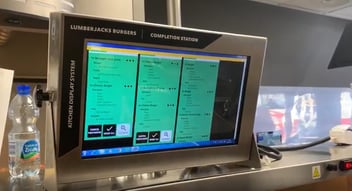
Once orders are placed, efficient execution becomes the next critical automation area. Ordering Stack’s Kitchen Display Systems (KDS) eliminate the need for printed tickets by routing orders directly to kitchen stations, where chefs can monitor and manage preparation workflows in real time. By syncing orders from all channels—kiosks, mobile, web, or aggregators—directly to the kitchen interface, KDS helps restaurants reduce errors, speed up service, and improve operational efficiency.
Aggregator Management:
Another vital automation frontier is the integration of third-party delivery platforms. Instead of manually re-entering orders from services like Uber Eats, Glovo, Wolt, or Takeaway into the POS, Ordering Stack automates this process, routing aggregator orders directly into the restaurant’s system. This aggregator management capability not only reduces labor and errors but also supports Scalability and consistent service delivery across all channels.
Together, these areas of automation—order capture, kitchen execution, and aggregator integration—help restaurant chains improve Speed of Service (SOS), reduce operational complexity, and provide a more seamless experience for both staff and guests.
Scalability: How Automation Helps You Grow
Rapid expansion is nearly impossible when restaurant operations rely on manual, fragmented, and inconsistent processes. Opening ten new locations in a short period of time requires far more than real estate and staffing—it demands repeatable, standardized workflows. QSR automation provides that foundation by replacing ad-hoc procedures with unified systems that can be replicated across every new restaurant, ensuring predictable performance from day one.
Large QSR brands such as Popeyes or Burger King demonstrate how technology enables growth without sacrificing quality. By relying on centralized ordering platforms, integrated kitchen systems, and consistent digital interfaces, these brands are able to deliver the same menu, service flow, and Speed of Service (SOS) in every location. Automation supports guest experience optimization by minimizing human error and ensuring that customers receive the same fast, reliable experience—whether they visit a flagship store or a newly opened franchise.
Cloud-based systems are a critical enabler of this scalability. With modern, cloud-native solutions, restaurant chains can manage menus, pricing, promotions, and product availability across the entire network from a single dashboard. A menu update or campaign launch can be rolled out to dozens—or hundreds—of locations with one click, accelerating digital transformation while maintaining full operational control. As brands grow, automation is what allows them to scale efficiently, stay agile, and compete effectively in an increasingly crowded QSR market.
Designing Restaurant Spaces for Automation
QSR automation is not limited to software and digital systems—it also fundamentally shapes how restaurant spaces should be designed. Physical layout and technology must work together to support fast, frictionless service. Treating automation as part of the architectural concept, rather than an add-on, allows restaurants to fully unlock the benefits of digital transformation and operational efficiency.
A well-designed self-service kiosk zone is a prime example. Kiosks should be clearly visible upon entry, intuitively arranged, and positioned to prevent bottlenecks during peak hours. Proper spacing, logical customer flow, and proximity to order pickup areas all contribute to faster decision-making and improved Speed of Service (SOS). When kiosks are integrated into the layout from the beginning, they naturally guide guests through the ordering process without the need for staff intervention.
Equally important is the separation of guest and delivery traffic. As delivery volumes grow, dedicated pickup zones for couriers help avoid congestion at the counter and reduce disruption to dine-in customers. Thoughtfully designed restaurant ergonomics—covering kiosk placement, kitchen flow, and order collection points—directly impact throughput and service capacity. By aligning physical space with automation strategy, QSR brands can serve more orders, more reliably, without expanding their footprint or increasing labor costs.
Conclusion
Automation is no longer a short-term optimization—it is a long-term investment that pays off through higher efficiency, lower operational costs, and stronger customer loyalty. By reducing friction in ordering, streamlining kitchen workflows, and enabling consistent service across all locations, automation helps QSR brands deliver on their core promise: fast, reliable, and convenient dining experiences. Over time, these improvements translate directly into better margins and a more resilient business model.
Ultimately, QSR automation is what allows restaurant chains to scale with confidence, adapt to changing consumer expectations, and compete effectively in an increasingly crowded market. Brands that embrace automation today are better positioned to grow tomorrow—without sacrificing speed, quality, or guest satisfaction.
Want to see how this works in practice?
Discover how Ordering Stack can automate your restaurant network and support scalable growth—explore the Ordering Stack homepage or dive into real-world Case Studies to see the impact firsthand.