
If a restaurant is a theater, the front of house in a restaurant (FOH) is the main stage, and your guests are the audience. For decades, traditional hospitality management dictated that this space relied purely on human touchpoints—a welcoming smile from a hostess or a waiter's menu recommendations. However, looking at the state of FOH technology in 2026, the ecosystem has undergone a massive evolution. The modern restaurant customer experience is now uniquely hybrid, driven just as much by seamless digital innovations like self-service restaurant kiosks and QR code table ordering as it is by classic face-to-face hospitality.
But what is FOH in a restaurant today if not a direct bridge to the kitchen? For a savvy restaurant FOH manager, success no longer stops at managing traditional front of house staff roles; it requires orchestrating a unified omnichannel restaurant platform. Mastering the delicate balance of FOH vs BOH by seamlessly syncing guest-facing tech with back of house operations—such as an advanced Kitchen Display System (KDS) and core restaurant POS systems—is the ultimate key to maximizing your table turnover rate, ensuring flawless order accuracy, and unlocking higher profitability.
What You Will Learn From This Article:
- Every zone and staff role that makes up the Front of House.
- The clear distinction between the "stage" and the "backstage."
- How technology is reshaping the dining room experience in 2026.
- How to eliminate communication errors between your servers and your kitchen using cloud tech.
What is FOH (Front of House) in a Restaurant?
In the hospitality industry, FOH (Front of House) refers to all areas of a restaurant that are visible, accessible, and interactive for guests. It is the ultimate stage where the restaurant customer experience is shaped, lasting from the moment a guest walks through the door until they pay their bill and leave.
Key Elements of the Modern Front of House:
- Physical Areas: The dining room, bar, waiting areas, host stands, outdoor patios, ordering counters, and customer restrooms.
- Front of house staff roles: Guest-facing personnel including hosts/hostesses, servers, bartenders, bussers, and the restaurant FOH manager who orchestrates hospitality management and front of house training.
- FOH technology 2026: Next-generation digital touchpoints such as self-service restaurant kiosks, QR code table ordering, digital signage, and mobile restaurant POS systems that drastically improve FOH communication.
FOH vs BOH: The Ultimate Connection
While back of house operations (BOH) focus strictly on food preparation, inventory, and kitchen management, the Front of House (FOH) is entirely dedicated to customer service, ambiance, and revenue generation.
In 2026, the secret to maximizing your table turnover rate and optimizing your RevPASH calculation lies in breaking down the traditional wall of FOH vs BOH. By leveraging a unified omnichannel restaurant platform, savvy operators seamlessly sync front-end digital orders directly with a Kitchen Display System (KDS). This interconnected ecosystem ensures flawless order accuracy and eliminates friction between the kitchen line and the guest's table.
The Anatomy of the Front of House: Areas and Staff
To truly master hospitality management, one must understand that the front of house in a restaurant is not just a single dining room—it is a finely tuned ecosystem divided into distinct operational zones, each requiring a specialized touch. Whether you run a fine-dining establishment or a bustling quick-service concept, these physical areas shape the guest's journey:
- The Entrance & Host Stand: The literal gateway to your brand, where first impressions are cemented within seconds.
- The Dining Room: The core landscape of the restaurant where the majority of the customer experience takes place.
- The Bar Area: A high-margin social hub that serves both seated guests and the entire dining floor.
- The Ordering Counter: The vital checkpoint for Quick Service Restaurants (QSR) where speed and flawless FOH communication are paramount.
- Guest Restrooms: An often-overlooked area that serves as a direct reflection of your restaurant's hygiene and attention to detail.
The FOH Team: Roles and Responsibilities
Behind these physical zones is a dedicated team. To keep service running smoothly, every member must undergo comprehensive front of house training to excel in their specific front of house staff roles:
- Hosts/Hostesses: The gatekeepers of the floor. They greet incoming guests, manage the waitlist, and strategically assign seating to optimize the restaurant's table turnover rate.
- Servers/Waiters: The primary brand ambassadors and sales engine. They guide guests through the menu, cross-sell high-margin items, and deliver direct table service.
- Bartenders: The mixology experts who balance fast-paced drink preparation for the entire floor with personal hospitality for guests seated at the bar counter.
- Bussers: The unsung heroes of floor efficiency, responsible for clearing dishes, resetting tables, and maintaining the immaculate environment required for fast table rotation.
The Conductor: The Restaurant FOH Manager
At the heart of this entire operation is the restaurant FOH manager. While their job involves logistics, scheduling, and standard operating procedures, their real value shines during live service. A great FOH manager is the ultimate firefighter on the floor—adept at handling guest complaints, managing sudden rushes, backing up staff during bottlenecks, and maintaining a bird's-eye view of the floor to ensure a seamless, high-revenue service.
Front of House vs. Back of House (FOH vs BOH)
To run a highly profitable restaurant, operators must master the delicate dance between the two distinct engines driving the business: the Front of House and the Back of House. While they operate under the exact same roof, their environments, daily pressures, and core objectives couldn't be more different.
- Back of House (BOH): This is the production powerhouse. It encompasses the kitchen, prep stations, storage walk-ins, dishwashing area, and administrative offices. It is where your product is designed, managed, and manufactured. The BOH team—including the executive chef, line cooks, and dishwashers—focuses on culinary precision, speed, portion control, and food safety.
- Front of House (FOH): This is the experiential and revenue engine. It covers the dining room, bar, ordering counters, and outdoor patios. It is the space where your product is actively marketed, sold, and consumed. The FOH team focuses entirely on hospitality, guest satisfaction, ambiance, and driving up the average check size.
The Friction Point: Where the Two Worlds Clash
Historically, the intersection where FOH vs BOH meet has been the ultimate friction point in the hospitality industry. We have all witnessed—or felt—the tension: a server writes down a custom order incorrectly, a handwritten ticket becomes unreadable under grease and steam, or the kitchen backs up during a rush, leaving the floor staff to take the heat from hangry customers.
The Cost of Miscommunication: When back of house operations and front of house staff roles are out of sync, it directly compromises order accuracy, delays your table turnover rate, and completely deflates employee morale.
Bridging this communication gap is the single greatest operational hurdle for a restaurant. Fortunately, in 2026, restaurants no longer have to rely on shouted orders and paper tickets. By replacing chaos with technology—syncing front-end restaurant POS systems directly with a digital Kitchen Display System (KDS)—successful operators are finally turning this historical friction point into a seamless, automated workflow.
The Digital Transformation of the Front of House
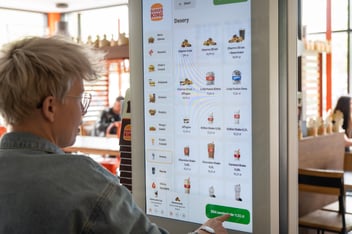
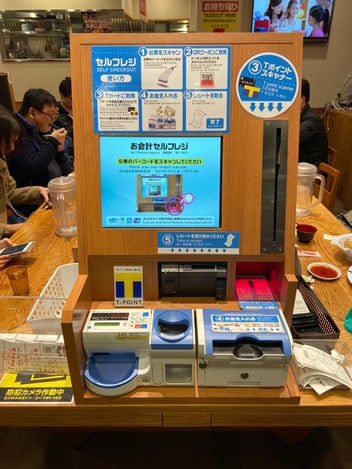
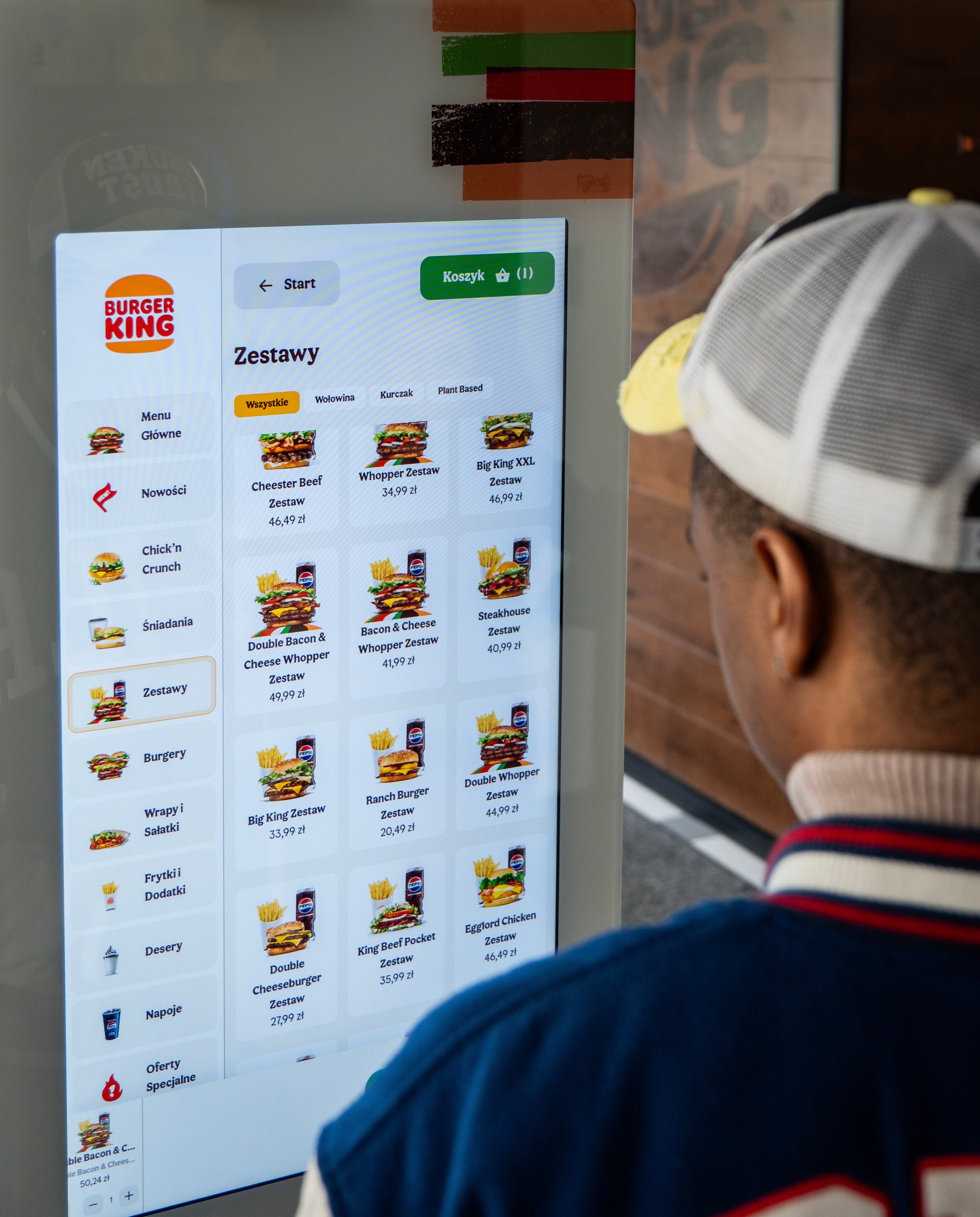
In 2026, FOH technology 2026 is no longer a futuristic luxury; it is deeply embedded into the fabric of the daily guest experience. Self-service restaurant kiosks have successfully stepped in as the new virtual cashiers of the Front of House, fundamentally eliminating peak-hour queues and freeing up staff to focus on genuine hospitality. Simultaneously, QR code table ordering has redefined the traditional dining room dynamic. By allowing guests to browse, order, and close their bills instantly without waiting for a server, restaurants can slash idle table time and dramatically optimize their table turnover rate.
Beyond individual tables, this digital transformation extends upward to smart digital signage. Modern digital menu boards above the counter do far more than just display items; they are fully interactive systems that react in real-time to kitchen inventory, automatically promoting specific dishes or hiding out-of-stock items. Together, these modern tools transform the front of house from a passive waiting area into a highly responsive, revenue-generating environment.
Bridging the Gap: Connecting FOH and BOH with Ordering Stack
Even with flawless front of house training and the most charming team filling traditional front of house staff roles, your service will ultimately stumble if FOH communication with the kitchen breaks down. The historical disconnect between the dining floor and the kitchen line remains the single greatest bottleneck to scaling a food business. This is precisely why modern hospitality management requires more than just standalone tools; it demands a unified solution like Ordering Stack to serve as the central nervous system of your entire restaurant operation.
Think of Ordering Stack as the ultimate omnichannel restaurant platform that beautifully synchronizes every guest-facing touchpoint. Whether a customer prefers the speed of self-service restaurant kiosks in the lobby, scans a QR code table ordering system at their booth, or speaks directly to a server carrying a mobile tablet, Ordering Stack captures the data instantly. It sweeps away the fragmented chaos of legacy restaurant POS systems, ensuring that regardless of how a guest chooses to interact with your FOH, the order flow remains consolidated, standardized, and perfectly tracked.
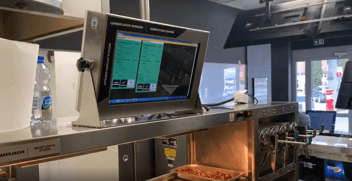
The real magic happens when those front-end actions instantly bridge the gap to your back of house operations. The exact second an order is finalized in the FOH, Ordering Stack transmits it flawlessly to the digital Kitchen Display System (KDS) screens in the back. By automating this pipeline, you completely eliminate human transcription errors, lost paper tickets, and the stressful shouting matches that traditionally plague peak hours. The immediate payoff is a dramatic spike in order accuracy restaurant owners can rely on, a faster table turnover rate, and an optimized RevPASH calculation—all while giving your team the peace of mind to focus on delivering an exceptional restaurant customer experience.
Key Performance Indicators (KPIs) for FOH Success
In modern hospitality management, a great restaurant FOH manager cannot rely on gut feelings alone to measure service quality; numbers must drive the strategy. To understand exactly how efficiently the front of house in a restaurant is running, operators need to keep a laser focus on specific operational metrics that directly impact the bottom line:
- Table Turnover Rate: This measures how quickly a table is occupied, served, cleared, and reset for the next party. Maximizing this rate—without making guests feel rushed—is the ultimate way to boost daily revenue.
- RevPASH (Revenue Per Available Seat Hour): Moving beyond basic food costs, the RevPASH calculation reveals exactly how much revenue each individual seat generates for every hour the restaurant is operational. It is the most accurate reflection of front-of-house seat utilization and menu engineering success.
- Customer Satisfaction & Digital Reviews: A restaurant's online reputation on Google or TripAdvisor almost always hinges on the restaurant customer experience delivered by the FOH team. High ratings are a direct byproduct of staff attentiveness, ambiance, and flawless order accuracy.
These KPIs are deeply interconnected, and in 2026, they are heavily influenced by your choice of technology. For instance, introducing QR code table ordering or self-service restaurant kiosks drastically slashes the time guests wait to order and pay, which naturally increases your table turnover rate and lifts your RevPASH calculation. By letting tech handle the transactional heavy lifting, your team gains the precious time needed to elevate hospitality, transforming a standard meal into a five-star review.
Conclusion: Mastering the Modern Front of House
Ultimately, the front of house in a restaurant has evolved from a purely social environment into a sophisticated, tech-enabled ecosystem. Surviving and thriving today requires breaking down old silos and ending the historical conflict of FOH vs BOH. By uniting your front of house staff roles with a robust omnichannel restaurant platform like Ordering Stack, you seamlessly bridge the gap between guest desires and kitchen execution. Investing in this digital synergy doesn't just make life easier for your team—it builds a faster, smarter, and far more profitable restaurant.
Frequently Asked Questions (FAQ)
What does FOH stand for in a restaurant?
FOH stands for Front of House. In the hospitality industry, what is FOH in a restaurant refers to any area where guests are allowed and serviced. It encompasses the physical spaces like the dining room, bar, and outdoor patio, as well as the entire restaurant customer experience delivered by the floor team.
What is the difference between FOH and BOH?
The primary difference lies in guest visibility and core operational focus:
- FOH (Front of House): Guest-facing and revenue-driven. It focuses on customer service, upselling, and ambiance.
- BOH (Back of House): Production-facing and cost-driven. It includes back of house operations like the kitchen, prep areas, and dishwashing, focusing entirely on food quality, speed, and safety.
In modern restaurants, the traditional conflict of FOH vs BOH is solved by using an omnichannel restaurant platform to perfectly sync the two sides.
What are the main roles in the Front of House?
The most common front of house staff roles include:
- Hosts/Hostesses: Greeting guests and managing seating.
- Servers/Waiters: Taking orders, serving food, and driving sales.
- Bartenders: Preparing drinks and managing bar-area hospitality.
- Bussers: Clearing and resetting tables to improve the table turnover rate.
- Restaurant FOH Manager: Overseeing hospitality management, running front of house training, and handling guest relations.
Is a self-ordering kiosk considered FOH or BOH?
A self-ordering kiosk is strictly considered a part of FOH technology 2026. Because it is placed on the dining floor or in the lobby for direct guest interaction, it acts as a virtual FOH team member. However, its backend is fully integrated, meaning it instantly pushes orders straight to the Kitchen Display System (KDS) in the BOH to eliminate manual data entry.
How can technology improve Front of House operations?
Implementing modern FOH tech—like self-service restaurant kiosks and QR code table ordering—transforms operations in several key ways:
- Drastically Boosts Efficiency: Guests can order and pay instantly, which directly maximizes your table turnover rate.
- Improves Accuracy: Orders go directly from the guest's fingers to the kitchen, maximizing order accuracy restaurant metrics and eliminating human errors.
- Streamlines FOH Communication: It eliminates the need for servers to constantly run back and forth to legacy restaurant POS systems, leaving them with more time to focus on genuine hospitality.
- Drives Revenue: Automated upselling prompts on digital menus help increase average check sizes, heavily optimizing your overall RevPASH calculation.