
In 2026, restaurant profit margins are thinner than ever, making traditional "food cost" tracking insufficient. To survive the squeeze, operators must master prime costs management — balancing COGS with aggressive labor cost optimization. Today, true Restaurant ROI isn't just about kitchen hardware; it’s about the POS system investment and tech stack optimization that drives long-term growth.
From This Article, You Will Learn:
- The Real ROI Formula: How to calculate Return on Investment across different areas of your restaurant (Tech, Labor, Marketing).
- Tech Stack that Pays for Itself: Why investing in modern ordering platforms (like Ordering Stack) delivers the fastest ROI by cutting third-party fees.
- Labor Optimization: How self-service kiosks and QR ordering translate directly to your bottom line.
- Customer Lifetime Value (CLV): Why retaining a guest is cheaper than acquiring a new one, and how to measure it.
- Menu Engineering: Using sales data to eliminate dead weight and boost high-margin items.
The industry is shifting from gut-feeling to data-driven decision making. By leveraging restaurant analytics, you can move beyond intuition to improve your table turnover rate and average ticket size. Whether you are evaluating self-service kiosk ROI or navigating third-party delivery fees, every digital touchpoint must contribute to your operational efficiency.
Success now depends on understanding restaurant financial metrics like customer lifetime value (CLV) to ensure your omnichannel ordering ROI keeps you well ahead of the break-even point.
Understanding the Core Metrics of Restaurant ROI
To accurately measure your return on investment hospitality, you must first master your baseline figures. At Ordering Stack, we advocate for data-driven decision making to transform complex finances into actionable insights. To keep your restaurant profit margins healthy, focus on these three pillars:
- Prime Costs Management: This is the combined total of your cost of goods sold (COGS) and labor cost optimization. If these costs exceed 60-65% of your revenue, your restaurant ROI will inevitably suffer.
- Customer Acquisition Cost (CAC): This metric tracks exactly what you spend to bring in a new guest. In an era of high third-party delivery fees, reducing your CAC through omnichannel ordering ROI is essential for long-term survival.
- Customer Lifetime Value (CLV): This represents the total revenue a customer generates throughout their relationship with your brand. For a sustainable break-even point restaurant model, your CLV should be at least triple your CAC.
By monitoring these restaurant financial metrics through advanced restaurant analytics, you can move away from guesswork and ensure every POS system investment or tech stack optimization contributes directly to your bottom line.
Tech Stack ROI: Why Legacy Systems are Costing You Money
Legacy systems often hide the true cost of inefficiency behind a mask of familiarity. When your POS system investment doesn't "talk" to your online ordering platform, you aren't just losing time — you are paying for human error and manual data entry. This lack of integration creates a massive drag on operational efficiency, where fragmented workflows silently erode your restaurant profit margins every single shift.
The most immediate boost to your Restaurant ROI comes from shifting away from heavy reliance on delivery aggregators. By transitioning orders from high-commission platforms to your own branded system, you bypass excessive third-party delivery fees and regain control over your margins. At Ordering Stack, we see the math play out clearly: reclaiming the margin from just a hundred monthly orders can often cover your entire software subscription, significantly lowering your break-even point.
True tech stack optimization relies on moving toward a centralized, omnichannel ordering ROI model. Instead of paying for a dozen disconnected apps, investing in a unified platform aggregates orders from all sources into a single stream of restaurant analytics. This not only slashes your internal IT costs but also empowers data-driven decision making, ensuring your technology acts as a profit center rather than a recurring expense.
Labor ROI: Maximizing Productivity Without Burnout
In an era of rising wages, achieving true labor cost optimization isn't about asking your team to work harder — it’s about using restaurant technology ROI to work smarter. By integrating automated touchpoints, you can maintain high service standards while protecting your restaurant profit margins from the weight of an oversized payroll. Here is how leading operators are shifting the math:
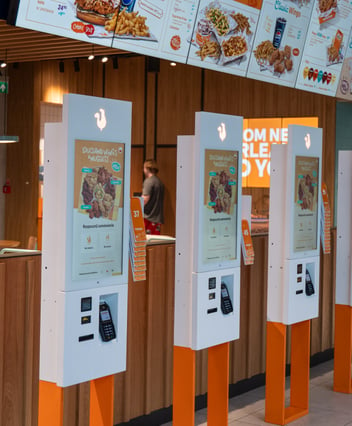
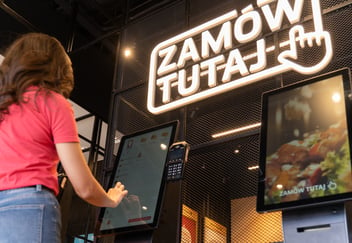
- Self-service Kiosk ROI & QR Codes: A kiosk acts as a tireless digital team member that never calls in sick and performs perfect upselling every time. Implementing these tools consistently increases your average ticket size by 15–30%, effectively paying for the POS system investment through sheer incremental revenue.
- Table Turnover Rate: Implementing "Pay-at-table" and mobile ordering solutions allows guests to close their checks instantly. By removing the 10-minute wait for a paper bill, you increase your table turnover rate, allowing you to serve more covers per shift without adding extra floor staff.
This strategic approach to operational efficiency ensures that your human staff can focus on hospitality rather than data entry, turning your front-of-house into a high-performance engine for Restaurant ROI.
Marketing ROI: Stop Guessing, Start Tracking
In the digital-first era of 2026, handing out paper flyers is an unmeasurable expense that drags down your Restaurant ROI. True first-party data monetization begins when you move your audience into a proprietary ecosystem, such as the web-ordering platform powered by Ordering Stack. By capturing guest information directly, you can launch targeted SMS and email campaigns where every cent spent is trackable. This shift toward data-driven decision making allows you to see exactly how much revenue a single notification generates, transforming marketing from a "black hole" of spending into a high-performance engine for restaurant analytics.
Focusing on a high loyalty program ROI is significantly more cost-effective than the constant struggle of high customer acquisition cost (CAC). Automated retention tools keep your brand top-of-mind, nudging existing guests to return without the need for expensive social media ads. When you prioritize customer lifetime value (CLV) over one-off transactions, your marketing spend stabilizes, and your average ticket size grows naturally through personalized offers. This strategic shift ensures your tech stack optimization doesn't just manage orders, but actively fuels long-term, predictable growth.
Data-Driven Menu Engineering
In the world of restaurant analytics, your menu is either a profit engine or a hidden leak. True restaurant menu engineering goes beyond simple food costing; it requires a deep dive into your "Product Performance Matrix." By analyzing sales velocity against individual restaurant profit margins, you can easily identify your "High-Performers" — those high-margin, high-popularity items that should be the focal point of your self-service kiosk ROI strategy — and separate them from the low-margin burdens that inflate your break-even point.
This process relies entirely on data-driven decision making rather than chef's intuition. With a centralized reporting system like Ordering Stack, you can perform dynamic adjustments in real-time. If rising COGS on a specific ingredient turns a top seller into a low-profit item, you can instantly update your digital menu across all channels. This level of operational efficiency ensures that your average ticket size is always backed by maximum profitability, allowing you to pivot your offerings before underperforming dishes eat into your quarterly Restaurant ROI.
Conclusion: Future-Proofing Your Bottom Line
Maximizing restaurant ROI in 2026 is no longer about cutting corners; it’s about sharpening your digital edge. By mastering prime costs management through tech stack optimization, you transform your operation from a high-pressure environment into a streamlined profit engine. Whether you are improving your table turnover rate with kiosks or boosting customer lifetime value (CLV) through first-party data monetization, the path to sustainable growth is paved with data-driven decision making.
The "Squeeze" is real, but so is the opportunity for those who leverage the right tools. Transitioning away from high third-party delivery fees and towards an integrated, omnichannel ordering ROI model is the single most effective move you can make this year. Don't let legacy systems hold back your operational efficiency — the future of hospitality belongs to those who own their data and automate their success.
Don't let legacy systems and high fees drain your margins. Book a personalized demo with Ordering Stack today and see how our integrated ecosystem turns your restaurant analytics into a scalable profit engine.
FAQ
How do you calculate ROI for a new restaurant technology?
To calculate restaurant technology ROI, take the net profit generated by the tech (e.g., labor savings + increased sales) minus the cost of the POS system investment, then divide by the cost of the investment. A true calculation must include "hidden" gains like reduced order errors and improved operational efficiency over a 12-month period.
What is a good profit margin for a restaurant in 2026?
While historically 3–5% was common, a healthy restaurant profit margin in 2026 should aim for 10–15%. Achieving this requires aggressive prime costs management, keeping the combination of COGS and labor below 60%, and leveraging automation to offset rising inflation.
How does a self-ordering kiosk improve my ROI?
A self-service kiosk ROI is driven by two main factors: labor cost optimization and automated upselling. Kiosks never forget to suggest an extra topping or a drink, which consistently increases the average ticket size by 15–30%. They also allow your staff to focus on production rather than order-taking, lowering your overhead.
Why is Customer Lifetime Value (CLV) more important than Customer Acquisition Cost (CAC)?
While CACtells you what it costs to get a guest through the door once, CLV measures their total value over years. Focusing on customer lifetime value (CLV) ensures long-term sustainability. If your loyalty program ROI is high, a single acquisition cost is amortized over dozens of visits, drastically improving your restaurant financial metrics.
How can I reduce my reliance on expensive third-party delivery apps?
The key is first-party data monetization. By implementing an omnichannel ordering ROI strategy — like the one powered by Ordering Stack — you can migrate customers from third-party apps to your own platform. This eliminates 30% third-party delivery fees and gives you direct access to guest data for personalized, low-cost marketing.