
Customer retention strategies are the systematic actions a business takes to keep existing customers ordering repeatedly. For restaurant chains, increasing repeat visits significantly boosts revenue and maximizes customer lifetime value. While attracting new guests drives initial growth, reducing churn ensures lasting profitability by turning casual diners into loyal brand advocates.
Scaling this consistency across multi-location brands requires leveraging technology and customer data. Seamless POS integration centralizes order history across channels, enabling precise customer segmentation and personalized marketing. Armed with these insights, operators can deploy targeted re-engagement campaigns, increase order frequency, and build lasting, profitable loyalty.
What you will learn from this article:
- What customer retention strategies are and why they matter more than acquisition alone.
- How retention differs from loyalty programs — and why loyalty is just one part of a bigger picture.
- Key metrics restaurant chains should track to measure retention.
- Practical, tested retention tactics for restaurants (win-back campaigns, feedback loops, personalization).
- How Ordering Stack helps restaurant chains use order data to reduce churn and increase repeat visits.
What Are Customer Retention Strategies?
At its core, a true customer retention strategy is a continuous, multi-layered ecosystem rather than a series of isolated promotional campaigns or basic reward points. While loyalty perks can temporarily attract attention, long-term retention depends on seamlessly connecting customer data, targeted communication, and daily operational execution. Modern multi-unit restaurant chains must leverage integrated digital platforms to track ordering habits, personalize interactions across every channel, and ensure frictionless service from the kitchen to the customer. By treating retention as a systematic, data-driven discipline rather than a simple discount program, operators turn occasional diners into predictable, lifelong revenue.
Customer Retention vs. Loyalty Programs — What's the Difference?
While the terms are often used interchangeably, it is crucial to recognize that a loyalty program is one tactic within a broader retention strategy — but retention also includes win-back campaigns, feedback loops, and data-driven segmentation that go beyond rewards alone. Think of your retention strategy as the entire operational and marketing framework designed to keep guests coming back, ensuring long-term profitability. In contrast, a customer loyalty strategy is a specific, technology-driven tool utilized within that framework to incentivize and reward repeat business. Understanding this distinction is vital for multi-location restaurant chains aiming to build sustainable, lasting relationships with their guests.
|
Feature |
Loyalty Program |
Customer Retention Strategy |
|
Definition |
A specific reward mechanism based on transactions (e.g., points, tiers). |
The overarching umbrella of activities, including the loyalty program as just one element. |
|
Scope |
Narrow — focuses on incentives, coupons, and immediate rewards. |
Broad — includes win-back campaigns, feedback loops, POS integration, and data-driven segmentation that go beyond rewards alone. |
|
Main Goal |
Encouraging repeat purchases and increasing average order value. |
Minimizing churn rate, maximizing customer lifetime value, and building long-term relationships across the franchise. |
Key Metrics to Measure Customer Retention in Restaurants
Tracking the right performance indicators allows multi-unit restaurant operators to quantitatively measure guest loyalty and optimize their data-driven retention strategies effectively.
- Repeat Visit Rate / Repeat Purchase Rate: The percentage of customers who return to place a second or subsequent order within a specific timeframe. A rising repeat purchase rate signals strong brand affinity, consistent food quality, and a smooth digital ordering experience.
- Customer Churn Rate: The proportion of guests who stop ordering from your restaurant chain over a given period. Monitoring churn helps operators identify at-risk customers early and trigger automated win-back campaigns before guests permanently defect to competitors.
- Customer Lifetime Value (CLV): The total revenue a single customer generates throughout their entire relationship with your brand. Elevating CLV through increased order frequency and cross-channel personalization is the ultimate benchmark of sustainable profitability.
- Order Frequency: The average number of times an individual guest orders within a specific window (e.g., monthly). Analyzing order frequency patterns reveals dining habits across locations, helping marketing teams time their promotional nudges for maximum impact.
Proven Customer Retention Strategies for Restaurant Chains
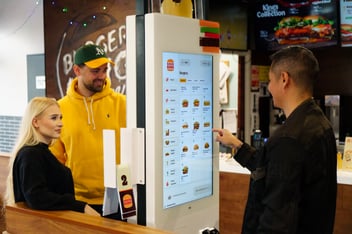
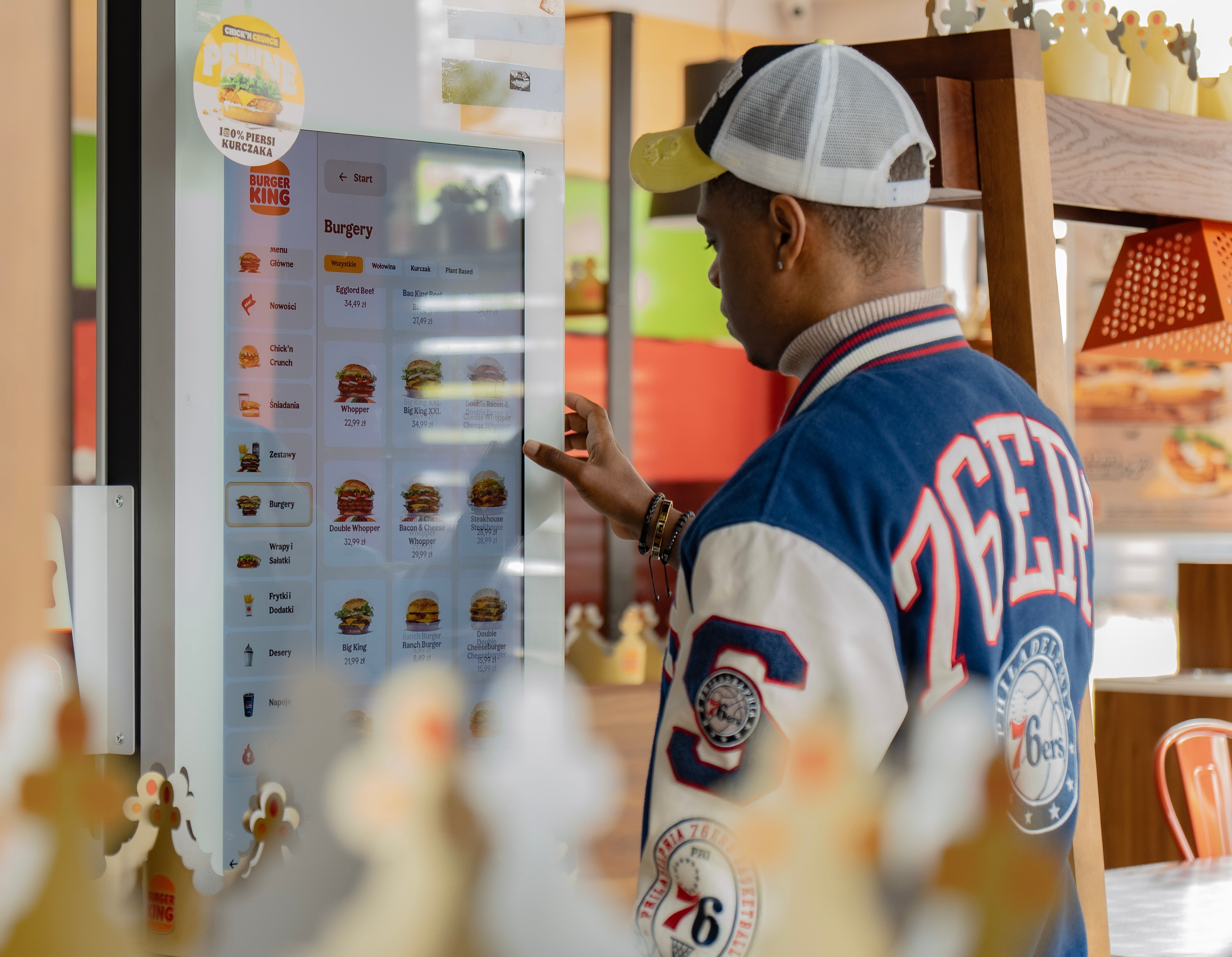
Converting a first-time guest into a loyal regular is where multi-location retention truly begins, as the initial ordering experience sets the trajectory for long-term customer lifetime value. To maximize this conversion rate, restaurant chains must deliver an impeccably consistent experience across every touchpoint—whether a guest interacts with a self-service kiosk, a mobile app, or traditional in-store ordering—supported by unified POS integration. By capturing ordering behaviors at every channel, operators can implement actionable retention tactics:
- Data-driven segmentation: Categorize guests into actionable cohorts (such as high-frequency regulars, at-risk diners, or inactive accounts) based on order history.
- Personalized win-back campaigns: Trigger automated, tailored offers to re-engage lapsed customers before they permanently defect to competitors.
- Proactive communication: Deliver real-time order updates and highly relevant push notifications or emails featuring personalized menu recommendations.
- Automated feedback loops: Prompt immediate post-purchase surveys or review requests to catch negative experiences early and protect brand reputation.
Executing these strategies effectively relies on using a centralized data foundation to power intelligent automation at scale. By continuously gathering guest insights, systematically addressing service gaps through feedback, and automating re-engagement workflows, enterprise restaurant operators can drive repeat purchase rates across all franchise locations.
How Restaurant Chains Can Use Data to Reduce Churn
Modern restaurant chains leverage unified POS and digital ordering data to systematically spot early warning signs of churn, particularly a subtle decline in order frequency among previously active guests. By aggregating transaction histories across all locations, operators can segment their customer base effectively and establish automated re-engagement campaigns that trigger personalized win-back offers the moment a guest strays from their usual dining habits. This centralized, data-driven approach converts raw location metrics into actionable, franchise-wide retention insights—ensuring operators can proactively protect revenue across every store before guests switch to competitors.
How Ordering Stack Helps Restaurant Chains Improve Customer Retention
Ordering Stack acts as the central intelligence engine for enterprise restaurant chains, seamlessly consolidating guest and order data from self-service kiosks, mobile apps, web channels, and existing POS systems into a unified platform. By capturing detailed order histories across all touchpoints, Ordering Stack enables operators to perform advanced customer segmentation and automatically detect at-risk customers when their order frequency slows down. With built-in loyalty mechanisms and flexible API integrations, the platform empowers multi-unit brands to launch automated win-back campaigns, deliver personalized offers, and eliminate operational friction—turning one-time guests into high-value regulars across every location.
Ready to reduce churn and build lasting loyalty across your restaurant chain? Book a demo with the Ordering Stack team today to see our retention-focused digital ecosystem in action.
FAQ
What is the difference between customer retention and customer loyalty?
Customer retention refers to the entire overarching strategy, operations, and data-driven efforts a restaurant chain uses to keep guests coming back over time. Customer loyalty is a specific program or tactic within that strategy—such as point systems, tiered perks, or digital reward cards—designed to incentivize repeat purchases.
What is a good customer retention rate for restaurants?
Average retention rates in the restaurant industry typically fall between 30% and 55%. Maintaining a rate above 50% is considered strong for multi-unit chains, though even a 5% increase in guest retention can boost overall profitability by 25% to 95%.
How can restaurant chains identify customers at risk of churning?
Chains identify at-risk guests by monitoring ordering frequency and recency via POS integration and digital ordering channels. When a customer exceeds their usual time window between purchases (such as failing to order for 30 to 45 days), centralized software flags the profile and can automatically trigger win-back promotions.
Do retention strategies work the same across all restaurant locations?
While the core digital infrastructure, loyalty mechanisms, and brand standards remain centralized across a franchise, location-level execution often varies. Local demographics, neighborhood traffic patterns, and store-specific ordering habits mean operators should use location-based data to refine their messaging and promotional offers.