
Conversion rate (CVR) and Average Order Value (AOV) are two of the most important revenue metrics for restaurant chains — improving them together, rather than separately, drives the biggest impact on profitability. When you optimize the digital customer journey, you do not just get more guests to complete their purchase; you also encourage them to spend more during each transaction. From the moment a customer interacts with your digital menu board to the final tap on a mobile app, every touchpoint in the ordering funnel must be engineered to prevent cart abandonment. By streamlining the checkout flow and focusing on systematic friction reduction, restaurant brands can scale their operations while boosting both their overall conversion rate and the final revenue per customer.
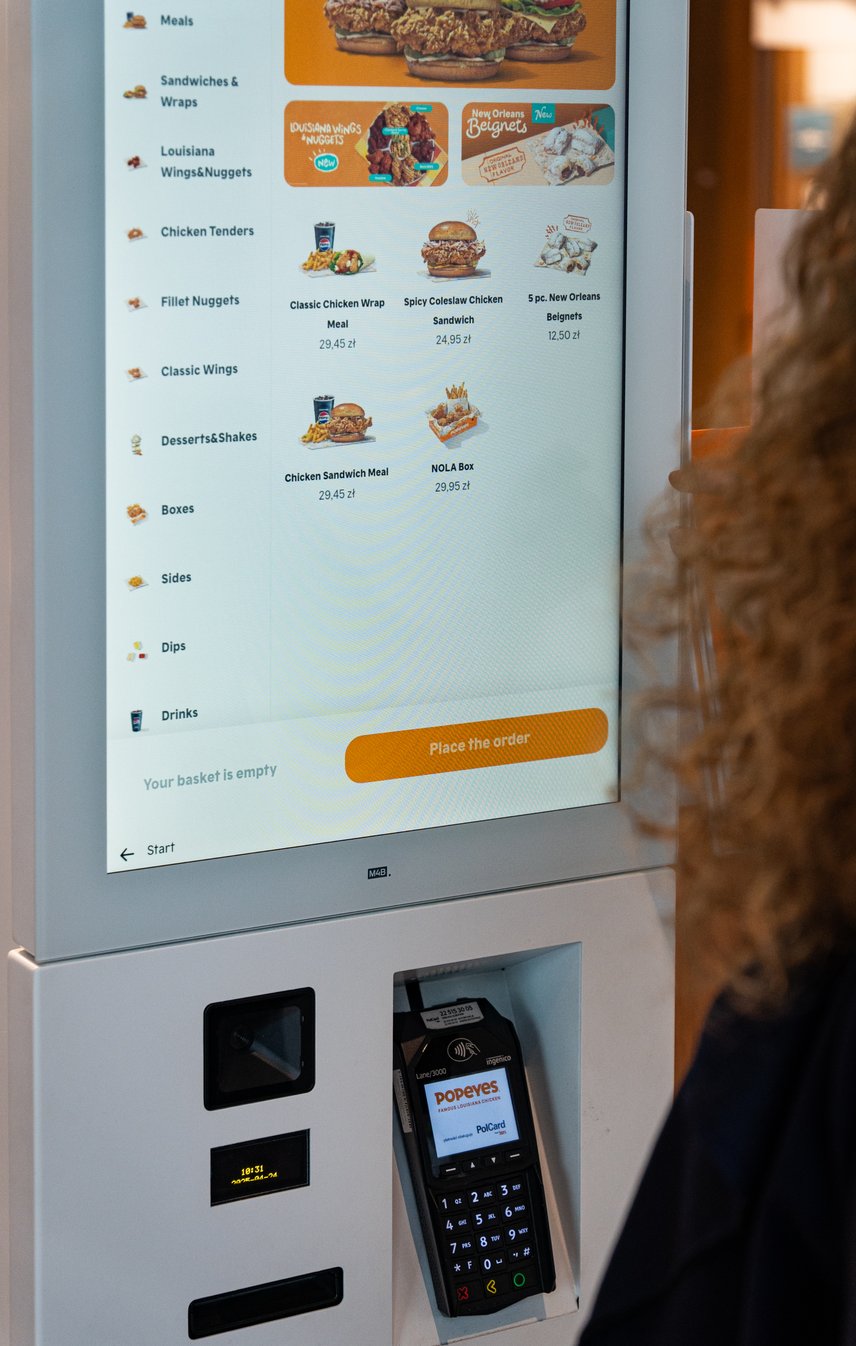
Unlocking this potential requires a modern, data-driven approach to digital ordering. Deploying automated personalization and targeted loyalty program rewards at the point of sale allows you to serve the right offers to the right guests. With deep POS integration feeding real-time analytics, marketing teams can run continuous A/B testing on menu design and promotional layouts. Whether you are nudging guests toward high-margin items on a self-service kiosk or prompting them with tailored combo offers during a mobile checkout, focusing on how to increase cvr and aov simultaneously transforms everyday transactions into predictable growth engines that also build long-term order frequency.
What you will learn from this article:
- Why CVR and AOV should be optimized together, not separately.
- Practical, tested strategies to increase conversion rate at kiosks, mobile, and online ordering.
- Proven upselling and bundling tactics to grow average order value.
- How POS and kiosk data can guide smarter menu and pricing decisions.
- How Ordering Stack helps restaurant chains improve both metrics in one platform.
What Is the Relationship Between CVR and AOV?
To understand the true health of your digital restaurant channels, you have to look at how conversion rate and average order value interact. Driving traffic to your self-service kiosk or mobile ordering app is only the first step in the customer journey. If your ordering funnel is overly complicated and leads to high cart abandonment, that initial traffic is essentially wasted. On the flip side, if your checkout flow is perfectly frictionless but lacks strategic upselling or cross-selling, you are missing out on maximizing the revenue per customer. Evaluating both metrics simultaneously gives you the most accurate picture of your digital profitability.
The financial impact of optimizing this relationship is best illustrated through a simple equation that governs your overall sales:
Total Revenue = Traffic x CVR x AOV
By feeding data from your POS integration and real-time analytics into this formula, the compounding effect becomes clear. You do not always need to spend marketing dollars to drive more people to your digital menu board. If you focus on how to increase average order value through smart bundle pricing, while simultaneously improving your CVR through friction reduction, the multiplied result is a massive boost to your bottom line without having to acquire a single new guest.
How to Increase Conversion Rate (CVR) in Restaurant Ordering?
Improving your conversion rate means removing every possible hurdle between a hungry customer and a completed payment. To ensure more guests finalize their transactions, restaurant chains must focus on optimizing every stage of the ordering funnel. Here are the most effective strategies to implement:
- Streamline the checkout flow by minimizing the number of taps and screens required to complete a purchase. A simplified process on both your self-service kiosk and mobile ordering app ensures vital friction reduction, keeping users engaged rather than frustrated.
- Elevate your menu design with high-quality imagery, concise dish descriptions, and lightning-fast loading times. Whether a guest is looking at a digital menu board or a web browser, a responsive and visually appetizing interface builds immediate trust and significantly reduces cart abandonment.
- Embrace a true omnichannel strategy that seamlessly connects kiosk, mobile, and web platforms. Allowing guests to order through their preferred channel at any given moment accommodates different phases of the customer journey, preventing walk-aways and capturing revenue that a single-channel approach might miss.
- Leverage deep POS integration and your loyalty program to deliver smart personalization. Showing returning customers their favorite past meals or suggesting relevant items based on their specific order history speeds up the decision-making process and creates a tailored experience that naturally drives higher order frequency.
How to Increase Average Order Value (AOV) in Restaurants?
Maximizing your average order value is not about pushing unwanted products on your guests, but rather about presenting them with highly relevant choices at the right moments. By leveraging automated technology across your digital touchpoints, you can guide guests toward higher spending without adding friction. Here are the most powerful ways to increase average order value across your restaurant chain:
- Implement real-time upselling and cross-selling algorithms within your self-service kiosk and mobile ordering checkout flows. By suggesting a larger drink or a side dish that perfectly complements their main course right before payment, you trigger spontaneous additions that feel like helpful suggestions rather than pushy sales pitches.
- Design irresistible combo offers and utilize bundle pricing strategies. Grouping popular items together at a slightly discounted rate simplifies the decision-making process for families or groups, making it easier for them to choose a complete meal bundle instead of individual a la carte items.
- Structure your loyalty program around order value milestones to incentivize larger carts. Prompts like "You are only 5 dollars away from earning free delivery or double loyalty points" encourage customers to search your menu for small add-ons to unlock the next reward tier, driving up the revenue per customer.
- Introduce limited-time offers and micro-prompts like "add to order" on your digital menu board and checkout screens. Combining these with personalization data enables you to suggest popular daily specials or seasonal treats tailored to the current weather, time of day, or guest preferences, generating quick and easy sales lifts.
Strategies That Improve Both CVR and AOV at the Same Time
While many restaurant operators treat conversion and cart size as separate challenges, the most successful brands implement technology that tackles both metrics at once. By utilizing an advanced ordering platform, you can deploy features that not only guide more users to complete their purchase but also naturally expand their cart along the way. The table below outlines how specific tactics pull double duty to maximize your overall digital revenue.
|
Strategy |
Impact on Conversion Rate (CVR) |
Impact on Average Order Value (AOV) |
|
Self-service kiosk deployment |
Eliminates queue anxiety and standardizes the checkout flow, leading to immediate friction reduction and fewer walk-aways. |
Automatically prompts targeted cross-selling and upselling at the exact moment of decision, systematically increasing revenue per customer. |
|
Smart menu design and digital menu board optimization |
Intuitive navigation and high-quality imagery simplify the customer journey, preventing cart abandonment caused by confusion. |
Strategically highlights high-margin items, combo offers, and bundle pricing to naturally draw attention to premium options. |
|
Tiered loyalty program integration |
Saved payment methods and past order histories create a frictionless ordering funnel that speeds up the final transaction. |
Gamified spending thresholds encourage guests to add extra items to their cart to unlock the next reward, driving up the final ticket size. |
|
Continuous A/B testing via real-time analytics |
Uses deep POS integration to identify drop-off points in mobile ordering, allowing you to refine the interface for maximum conversions. |
Evaluates different promotional placements and add-on prompts to discover which combinations most effectively increase order frequency and cart size. |
How Ordering Stack Helps Restaurant Chains Improve CVR and AOV
Achieving a flawless balance between conversion rates and cart sizes requires an enterprise-grade platform that connects all your digital touchpoints. Ordering Stack provides a unified architecture that links your self-service kiosk, mobile ordering app, and web channels directly to your core operations through robust POS integration. By centralizing this data, restaurant chains can deliver dynamic recommendations that feel like a natural part of the customer journey. When a guest interacts with the interface, the system leverages real-time analytics to serve personalized upselling and cross-selling prompts instantly. This ensures you are not just preventing cart abandonment through a streamlined checkout flow, but actively presenting the right combo offers and bundle pricing to maximize the revenue per customer.
Conclusion
To truly master how to increase CVR and AOV simultaneously, brands need technology that removes barriers instead of creating them. Outdated systems often introduce unnecessary steps that disrupt the ordering funnel and hurt overall order frequency. With Ordering Stack, you gain the agility to run continuous A/B testing on your digital menu board and application interfaces, allowing you to find the perfect mix of friction reduction and targeted promotions.
Are you ready to optimize your digital channels and see a measurable impact on your bottom line? Contact the Ordering Stack team today to schedule a personalized demo and discover how our omnichannel platform can transform your restaurant operations and drive sustainable growth.
FAQ
What is a good CVR for restaurant ordering?
Unlike traditional e-commerce platforms where a conversion rate of 2% to 3% is considered standard, digital restaurant channels typically see much higher engagement. Because hungry customers visiting your website or mobile ordering app usually have high intent, a strong web and mobile CVR sits between 10% and 15%. For self-service kiosks, the conversion rate is significantly higher, often exceeding 90%, since the guest is already in the physical restaurant and has committed to making a purchase.
Does increasing AOV hurt conversion rate?
It can if the upselling and cross-selling strategies are intrusive or slow down the ordering funnel. If a checkout flow is overloaded with generic pop-ups and aggressive prompts, it creates friction that leads to cart abandonment. However, when you utilize dynamic, personalized recommendations based on previous order history, suggestions feel helpful rather than disruptive. Smart menu design allows you to boost average order value naturally while maintaining a frictionless path to payment.
How fast can restaurants see results from CVR/AOV optimization?
Many restaurant chains see measurable improvements within just a few weeks of implementing targeted optimizations. Simple adjustments like updating the digital menu board layout, introducing bundle pricing, or deploying self-service kiosks can yield an immediate 15% to 30% increase in check sizes. Using real-time analytics integrated with your POS lets your team monitor behavior hourly, making it easy to see exactly when and where the optimizations are driving financial success.
Can kiosks improve both metrics at once?
Yes, self-service kiosks are among the most powerful tools for raising both conversion rate and average order value simultaneously. Kiosks provide an instant solution to friction reduction by eliminating long counter lines, ensuring guests do not walk out due to queue anxiety. At the exact same time, the kiosk interface serves as an automated sales assistant, presenting perfectly timed, personalized upsell prompts on every transaction. Integrating your loyalty program directly at the kiosk screen completes this customer journey, boosting both trust and the total revenue per customer.